Before you read
What to expect from 1984
In a state that watches everything and rewrites the past, one man begins to think for himself.
SurveillanceTruthLanguagePower
No plot outcomes, twists, or ending details appear in this version.
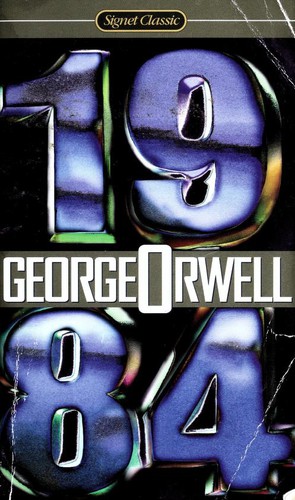
49Dystopian fiction
Pick it up if you want the book behind the terms Big Brother, doublethink and Orwellian.
Before you read
In a state that watches everything and rewrites the past, one man begins to think for himself.
No plot outcomes, twists, or ending details appear in this version.
Spoiler-free reading guide
Nineteen Eighty-Four, published in 1949, is set in Airstrip One, a province of the superstate Oceania. The Party rules through its figurehead, Big Brother, and keeps citizens under constant watch with telescreens that both broadcast and observe.
Winston Smith works at the Ministry of Truth, where his job is to rewrite old newspaper articles so that history always agrees with the Party's current line. Quietly unhappy, he starts to keep a diary, which is an act the Party punishes. The novel follows what happens when he looks for ways to be honest with himself and with someone else.
It suits anyone who wants to understand where terms such as Big Brother, Newspeak, doublethink and thoughtcrime come from, and it is a common school and book club choice. It is bleak and contains scenes of cruelty, so it is not a comforting read, but it is short enough to finish in a week.
The prose is plain and direct. The first part builds the world with long passages of description, the second part focuses on the characters, and the third part is the most intense. Many editions include an appendix on Newspeak, which is worth reading after the story. At about 330 pages it is manageable even for readers new to classics.
Surveillance. The novel imagines a state in which privacy has been abolished, and invites comparison with the present.
Truth and memory. The Party controls the past, so what people remember becomes a political act.
Language and thought. Newspeak is designed to shrink the range of ideas that can be expressed.
Winston Smith is a quiet, anxious Party member who works at the Ministry of Truth and keeps secret doubts. Julia is a young woman who works in the Fiction Department and is more practical about rebellion than Winston. O'Brien is a member of the Inner Party whom Winston believes he can trust. Big Brother is the Party's public face, Syme works on the Newspeak dictionary, and Mr Charrington runs an antique shop where Winston finds a private room.
George Orwell wrote the novel between 1946 and 1948, much of it on the Scottish island of Jura, and it was published in June 1949. He died in January 1950. The book grew out of his experience of totalitarian propaganda in the 1930s and 1940s, and its vocabulary, including Big Brother, doublethink and thoughtcrime, has entered everyday speech. It is regularly among the most borrowed and studied novels of the twentieth century.
Animal Farm is Orwell's short allegory of power. Brave New World by Aldous Huxley is the classic contrast, a dystopia built on pleasure rather than fear. The Handmaid's Tale by Margaret Atwood is a later novel about control.